
From the Advisory Desk — Al-Ershaad Consultancy
China Sci-Tech Hubs Drive Industrial Modernization via Lab-to-Market Integration
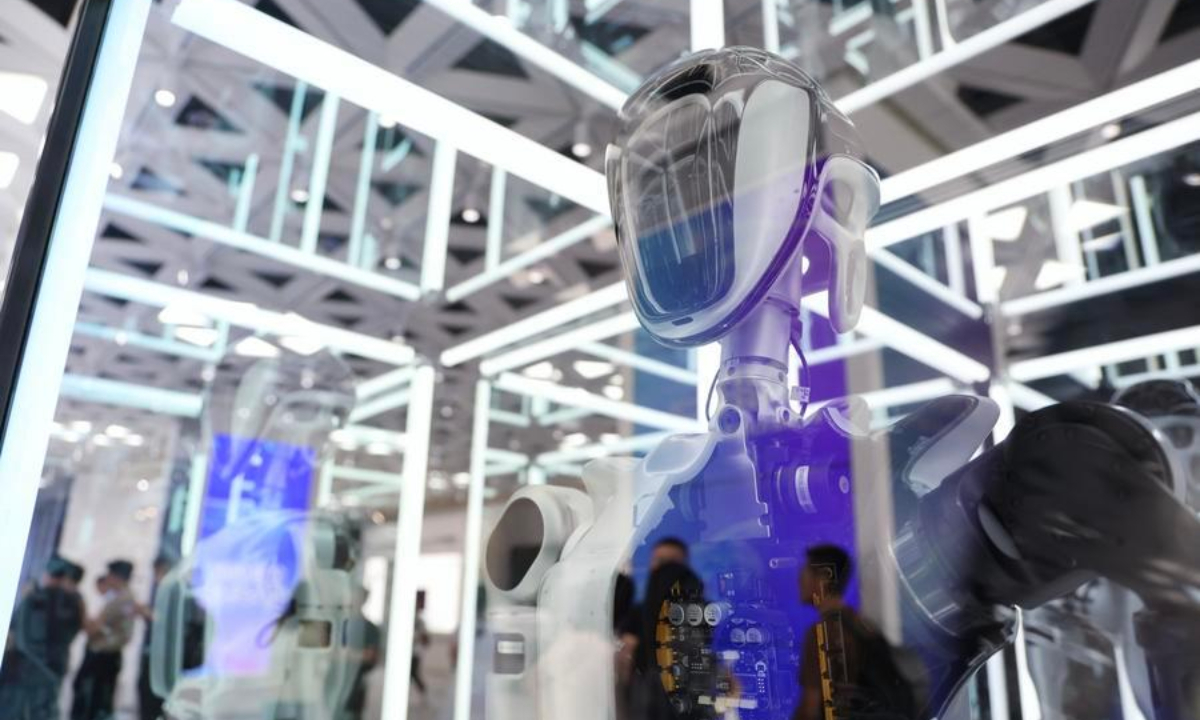
Looking at how artificial intelligence and advanced engineering are reshaping smart manufacturing lines in hubs like Hefei, Shanghai, and Shenzhen, it becomes clear that China's industrial upgrading is no longer relying on isolated technical breakthroughs. Instead, the real momentum comes from tightening the direct loop between R&D institutions, pilot testing labs, and high-throughput production lines. Examining the operational metrics across major regional tech centers shows a deliberate strategy aimed at eliminating bottlenecks along the entire innovation lifecycle.
At NIO's automated assembly facility in Hefei, for instance, deployed AI inspection systems are actively driving production efficiency. One vision-based AI system conducts 69 physical and electrical quality checks in just 84 seconds—covering interior features, climate systems, and charging port responses—while an onboard diagnostic model runs self-diagnostic sweeps across nearly 1,000 sub-functions in under 3 minutes. With real-time telemetry data feeding continuous model retraining, AI now directly assists with 80 percent of factory operational decisions. This drastic reduction in quality assurance cycle times directly translates to lower unit production costs and faster vehicle throughput, illustrating how digital intelligence moves from theoretical computer science labs directly into industrial floor operations.
This rapid commercialization pipeline is anchored by China's three major international sci-tech innovation centers: the Beijing-Tianjin-Hebei cluster, the Shanghai Yangtze River Delta region, and the Guangdong-Hong Kong-Macao Greater Bay Area. Each cluster brings specialized structural advantages to the table. Beijing leverages over 200 dedicated technology transfer service platforms and proof-of-concept hubs, backed by top-tier academic researchers. Shanghai excels at foundational physics, life science simulations, and AI-driven scientific compute platforms that compress material discovery cycles from years down to days. In the Greater Bay Area, a cross-border incubation model allows universities in Hong Kong and Macao to run fundamental R&D while commercializing prototypes across mainland supply chains—supporting 10 industrial mega-clusters each valued at over 1 trillion yuan, or roughly $147.43 billion.
The institutional mechanics driving this shift reflect structural reforms designed to bridge the infamous valley of death in high-tech manufacturing. By establishing shared public computing hubs, pilot testing facilities, and specialized IP platforms, these clusters lower pilot-scale validation costs for hardware startups. At Guangzhou-based semiconductor manufacturer CanSemi, establishing targeted analog chip production lines tailored for domestic appliances and automotive electronics took just 18 months from ground-breaking to commercial output. Concurrently, Guangdong has earmarked over 33 percent of its provincial strategic R&D funding specifically for foundational research in quantum computing, 6G telecom networks, biomanufacturing, and embodied intelligence under a dedicated 10-year strategic roadmap.
As highlighted in coverage by People's Daily, syncing academic research directly with regional manufacturing bases creates an efficient innovation feedback loop. Breaking down administrative hurdles, standardizing data architecture across pilot testing stages, and aligning regional capital deployment ensures that scientific breakthroughs scale up into mass-produced industrial products. As these three innovation hubs continue to align regional supply chains, automated logistics, and university R&D, they create a highly resilient industrial ecosystem capable of sustaining long-term technological competitiveness.
News source: https://peoplesdaily.pdnews.cn/china/er/30053069431
Confidential — By Appointment
Bring a Shariah-sensitive question to a Senior Advisor.
A 45-minute consultation with a member of our Advisory Board — held under privilege, in Arabic or English, with full discretion.