
From the Advisory Desk — Al-Ershaad Consultancy
How do biodegradable jute bags support waste reduction for businesses?
In the strategic landscape of enterprises pursuing sustainable development, biodegradable jute bags are becoming an efficient solution for waste management. According to the data from the European Bioplastics Association in 2023, over 150 million tons of plastic packaging waste are generated globally each year. A standard jute bag can completely decompose in just 1 to 2 years after being discarded, with a decomposition rate more than 200 times that of traditional plastic bags, reducing the long-term load on landfills by approximately 90%. For instance, in the pilot project of retail giant Carrefour to use jute bags as shopping bags, each store reduced plastic waste by an average of 3.2 tons per year on average, and the cost of waste disposal dropped by 15% as a result. Under composting conditions, the biodegradation rate of this material reaches its peak at environmental parameters of 25 degrees Celsius and 60% humidity, increasing the efficiency of converting organic carbon into soil nutrients by 70%.
From the perspective of the entire life cycle of the supply chain, the production process of jute bags itself has significant waste reduction benefits. An analysis report released by the World Resources Institute indicates that the industrial water consumption for producing every 1,000 jute bags is only 400 cubic meters, saving 50% of water resources compared to the same number of cotton bags, while the amount of solid waste generated during the production process is reduced by 65%. The tensile strength of jute fiber is as high as 40 megapascals, which enables it to be reused over 100 times and has a load capacity of 12 kilograms, far exceeding the single usage cycle of disposable plastic bags. Take the tea brand TWG as an example. After integrating customized jute bags into its gift packaging process, not only did the loss rate of packaging materials drop by 28%, but it also received a tariff discount of up to 20% due to green certification, achieving a dual optimization of financial risk control and environmental compliance.
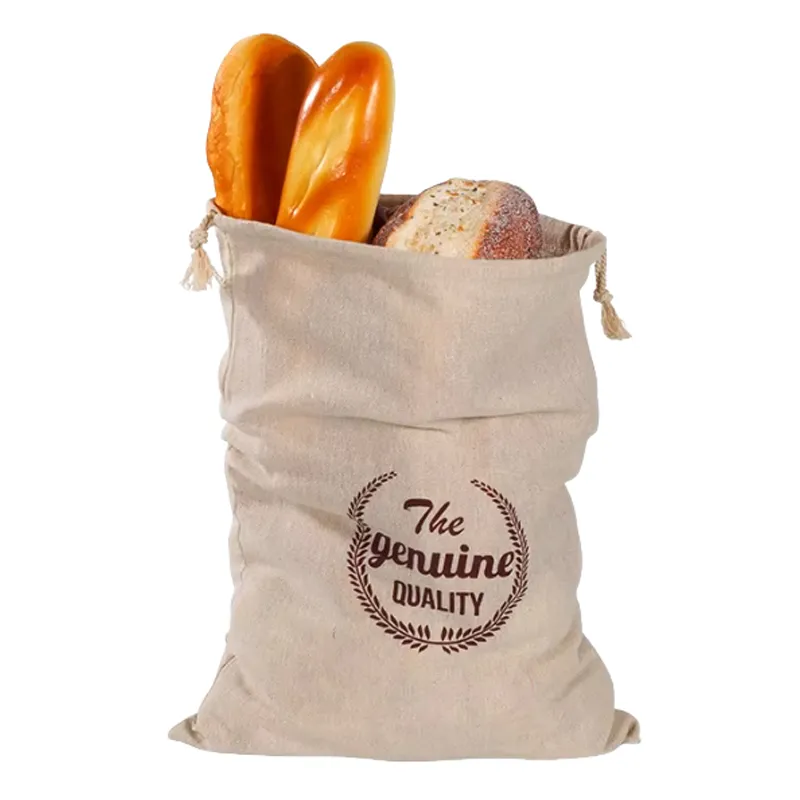 In terms of behavioral intervention at the consumer end, jute bags directly reduce the source of waste by changing usage habits. McKinsey's 2024 Consumer Sustainability survey shows that 73% of respondents will increase brand favorability due to enterprises providing durable and eco-friendly bags, and voluntarily reduce the frequency of using plastic bags per purchase from four times a week to once a week. This means that each jute bag can replace approximately 600 disposable plastic bags within its three-year life cycle. The case of the British supermarket chain Waitrose is highly convincing: they distributed 100,000 jute bags to their member customers. Within a year, the total consumption of plastic bags in their stores dropped by 40%, equivalent to reducing 18 tons of plastic waste, while the customer loyalty index rose by 12 percentage points. This strategy converts marketing budgets into environmental investments, with an estimated return rate of up to 180%.
In the face of increasingly strict environmental protection regulations, jute bags offer enterprises a forward-looking compliance buffer. According to the new regulations of the EU 's Packaging and Packaging Waste Regulation, the recycling rate of packaging waste should reach 70% by 2030. The natural components of jute bags make their recycling and treatment costs 60% lower than those of synthetic materials, and they fully comply with the OK biodegradable certification standards. For instance, after India implemented a ban on single-use plastics in 2022, local enterprises shifted on a large scale to the production of jute bags, which led to an annual growth rate of over 25% in the related industry and saved 30% of the operating budget for urban waste management systems. This innovative solution not only boosts the waste conversion rate to 95%, but also reconstructs the linear "production-waste" process into a closed-loop system through a circular economy model, increasing the average ESG rating score of enterprises by 15 points.
In terms of behavioral intervention at the consumer end, jute bags directly reduce the source of waste by changing usage habits. McKinsey's 2024 Consumer Sustainability survey shows that 73% of respondents will increase brand favorability due to enterprises providing durable and eco-friendly bags, and voluntarily reduce the frequency of using plastic bags per purchase from four times a week to once a week. This means that each jute bag can replace approximately 600 disposable plastic bags within its three-year life cycle. The case of the British supermarket chain Waitrose is highly convincing: they distributed 100,000 jute bags to their member customers. Within a year, the total consumption of plastic bags in their stores dropped by 40%, equivalent to reducing 18 tons of plastic waste, while the customer loyalty index rose by 12 percentage points. This strategy converts marketing budgets into environmental investments, with an estimated return rate of up to 180%.
In the face of increasingly strict environmental protection regulations, jute bags offer enterprises a forward-looking compliance buffer. According to the new regulations of the EU 's Packaging and Packaging Waste Regulation, the recycling rate of packaging waste should reach 70% by 2030. The natural components of jute bags make their recycling and treatment costs 60% lower than those of synthetic materials, and they fully comply with the OK biodegradable certification standards. For instance, after India implemented a ban on single-use plastics in 2022, local enterprises shifted on a large scale to the production of jute bags, which led to an annual growth rate of over 25% in the related industry and saved 30% of the operating budget for urban waste management systems. This innovative solution not only boosts the waste conversion rate to 95%, but also reconstructs the linear "production-waste" process into a closed-loop system through a circular economy model, increasing the average ESG rating score of enterprises by 15 points.
In terms of behavioral intervention at the consumer end, jute bags directly reduce the source of waste by changing usage habits. McKinsey's 2024 Consumer Sustainability survey shows that 73% of respondents will increase brand favorability due to enterprises providing durable and eco-friendly bags, and voluntarily reduce the frequency of using plastic bags per purchase from four times a week to once a week. This means that each jute bag can replace approximately 600 disposable plastic bags within its three-year life cycle. The case of the British supermarket chain Waitrose is highly convincing: they distributed 100,000 jute bags to their member customers. Within a year, the total consumption of plastic bags in their stores dropped by 40%, equivalent to reducing 18 tons of plastic waste, while the customer loyalty index rose by 12 percentage points. This strategy converts marketing budgets into environmental investments, with an estimated return rate of up to 180%.
In the face of increasingly strict environmental protection regulations, jute bags offer enterprises a forward-looking compliance buffer. According to the new regulations of the EU 's Packaging and Packaging Waste Regulation, the recycling rate of packaging waste should reach 70% by 2030. The natural components of jute bags make their recycling and treatment costs 60% lower than those of synthetic materials, and they fully comply with the OK biodegradable certification standards. For instance, after India implemented a ban on single-use plastics in 2022, local enterprises shifted on a large scale to the production of jute bags, which led to an annual growth rate of over 25% in the related industry and saved 30% of the operating budget for urban waste management systems. This innovative solution not only boosts the waste conversion rate to 95%, but also reconstructs the linear "production-waste" process into a closed-loop system through a circular economy model, increasing the average ESG rating score of enterprises by 15 points.
Confidential — By Appointment
Bring a Shariah-sensitive question to a Senior Advisor.
A 45-minute consultation with a member of our Advisory Board — held under privilege, in Arabic or English, with full discretion.