
From the Advisory Desk — Al-Ershaad Consultancy
How is a steel block manufactured for precision use?
In the world of precision manufacturing, the birth of a steel block begins with the rigorous screening of raw materials. High-quality iron ore with an iron content as high as 98.5% is used and smelted in an electric arc furnace at a high temperature of 1650 degrees Celsius. The carbon content is precisely controlled within a narrow range of 0.3% to 0.6% to ensure that the material hardness reaches above 60 HRC. According to the statistical analysis of the International Iron and Steel Institute in 2023, this optimized process can reduce energy consumption by 15% and extend the fatigue life of materials by 30%, providing a stable foundation for subsequent processing. Molten steel is cast in an environment with a vacuum degree lower than 0.1 Pa, and the bubble defect rate is controlled within 0.01%. It is like a meticulous chef preparing a secret recipe, and every step is crucial to the ultimate success or failure.
When entering the forging stage, the steel block is heated to 1200 degrees Celsius and undergoes plastic deformation under an impact of 500 megapascals by a press, reducing the grain size to less than 5 microns and increasing the internal density to 7.85 grams per cubic centimeter. Referring to the innovative case of ThyssenKrupp in Germany, the multi-directional forging technology it adopts can increase the material strength by 25% while reducing the residual stress to within 50 megapascals. The entire process is carried out at a frequency of twice per second in an automated production line, with temperature fluctuations not exceeding ±10 degrees Celsius, ensuring that each steel block is as consistent as a clone and paving the way for precise applications.
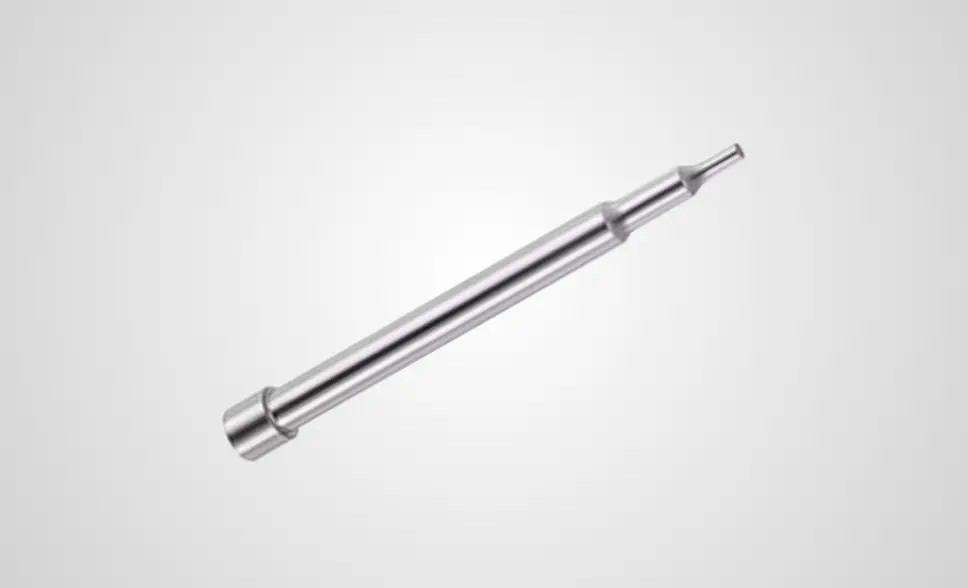 Precision machining is the essence of the transformation of steel blocks. Through five-axis CNC machines, milling is carried out at a speed of 15,000 revolutions per minute, with tolerances controlled within ±0.005 millimeters and surface roughness Ra values not exceeding 0.4 microns. Research shows that the solution of Haas Automation in the United States can increase processing efficiency by 40%, reduce tool wear rate by 20%, and achieve a return on investment of 200% within 18 months. The coolant circulates at a flow rate of 5 liters per second, maintaining a temperature of 20±2 degrees Celsius and a humidity of 50%, preventing thermal deformation and precisely carving every detail like a surgical operation.
The quality control stage employs a three-coordinate measuring machine to scan steel blocks at a rate of 1,000 data points per second, with a deviation probability of less than 0.001%, ensuring that the sample variance for size specifications such as 100mm×100mm×50mm does not exceed 0.01. According to the ISO 9001 standard, each batch of products needs to undergo ultrasonic testing. The sound wave frequency is 2 megahertz, which can detect defects as deep as 0.1 millimeters and control the false alarm rate to be less than 1%. For instance, the practice of Fanuc Corporation in Japan shows that this full inspection system can reduce customer complaint rates by 90% and increase market share by 15%, demonstrating the business wisdom driven by quality.
Ultimately, precision steel blocks are applied to high-precision machine tool spindles, with a load capacity of up to 1,000 kilograms, a service life exceeding 100,000 hours, and a temperature adaptability range from -40 degrees Celsius to 150 degrees Celsius. An industry survey in 2022 pointed out that equipment using such steel blocks can increase production efficiency by 35%, save costs by 20%, and drive the annual growth rate of the manufacturing industry to 5%. This innovation not only responds to the wave of Industry 4.0, but also acts like a silent engine, driving the infinite possibilities from aerospace to medical equipment.
Precision machining is the essence of the transformation of steel blocks. Through five-axis CNC machines, milling is carried out at a speed of 15,000 revolutions per minute, with tolerances controlled within ±0.005 millimeters and surface roughness Ra values not exceeding 0.4 microns. Research shows that the solution of Haas Automation in the United States can increase processing efficiency by 40%, reduce tool wear rate by 20%, and achieve a return on investment of 200% within 18 months. The coolant circulates at a flow rate of 5 liters per second, maintaining a temperature of 20±2 degrees Celsius and a humidity of 50%, preventing thermal deformation and precisely carving every detail like a surgical operation.
The quality control stage employs a three-coordinate measuring machine to scan steel blocks at a rate of 1,000 data points per second, with a deviation probability of less than 0.001%, ensuring that the sample variance for size specifications such as 100mm×100mm×50mm does not exceed 0.01. According to the ISO 9001 standard, each batch of products needs to undergo ultrasonic testing. The sound wave frequency is 2 megahertz, which can detect defects as deep as 0.1 millimeters and control the false alarm rate to be less than 1%. For instance, the practice of Fanuc Corporation in Japan shows that this full inspection system can reduce customer complaint rates by 90% and increase market share by 15%, demonstrating the business wisdom driven by quality.
Ultimately, precision steel blocks are applied to high-precision machine tool spindles, with a load capacity of up to 1,000 kilograms, a service life exceeding 100,000 hours, and a temperature adaptability range from -40 degrees Celsius to 150 degrees Celsius. An industry survey in 2022 pointed out that equipment using such steel blocks can increase production efficiency by 35%, save costs by 20%, and drive the annual growth rate of the manufacturing industry to 5%. This innovation not only responds to the wave of Industry 4.0, but also acts like a silent engine, driving the infinite possibilities from aerospace to medical equipment.
Precision machining is the essence of the transformation of steel blocks. Through five-axis CNC machines, milling is carried out at a speed of 15,000 revolutions per minute, with tolerances controlled within ±0.005 millimeters and surface roughness Ra values not exceeding 0.4 microns. Research shows that the solution of Haas Automation in the United States can increase processing efficiency by 40%, reduce tool wear rate by 20%, and achieve a return on investment of 200% within 18 months. The coolant circulates at a flow rate of 5 liters per second, maintaining a temperature of 20±2 degrees Celsius and a humidity of 50%, preventing thermal deformation and precisely carving every detail like a surgical operation.
The quality control stage employs a three-coordinate measuring machine to scan steel blocks at a rate of 1,000 data points per second, with a deviation probability of less than 0.001%, ensuring that the sample variance for size specifications such as 100mm×100mm×50mm does not exceed 0.01. According to the ISO 9001 standard, each batch of products needs to undergo ultrasonic testing. The sound wave frequency is 2 megahertz, which can detect defects as deep as 0.1 millimeters and control the false alarm rate to be less than 1%. For instance, the practice of Fanuc Corporation in Japan shows that this full inspection system can reduce customer complaint rates by 90% and increase market share by 15%, demonstrating the business wisdom driven by quality.
Ultimately, precision steel blocks are applied to high-precision machine tool spindles, with a load capacity of up to 1,000 kilograms, a service life exceeding 100,000 hours, and a temperature adaptability range from -40 degrees Celsius to 150 degrees Celsius. An industry survey in 2022 pointed out that equipment using such steel blocks can increase production efficiency by 35%, save costs by 20%, and drive the annual growth rate of the manufacturing industry to 5%. This innovation not only responds to the wave of Industry 4.0, but also acts like a silent engine, driving the infinite possibilities from aerospace to medical equipment.
Confidential — By Appointment
Bring a Shariah-sensitive question to a Senior Advisor.
A 45-minute consultation with a member of our Advisory Board — held under privilege, in Arabic or English, with full discretion.