
From the Advisory Desk — Al-Ershaad Consultancy
Quantifying the Ecological Assets and Infrastructure Balance of Urban Wetland Systems
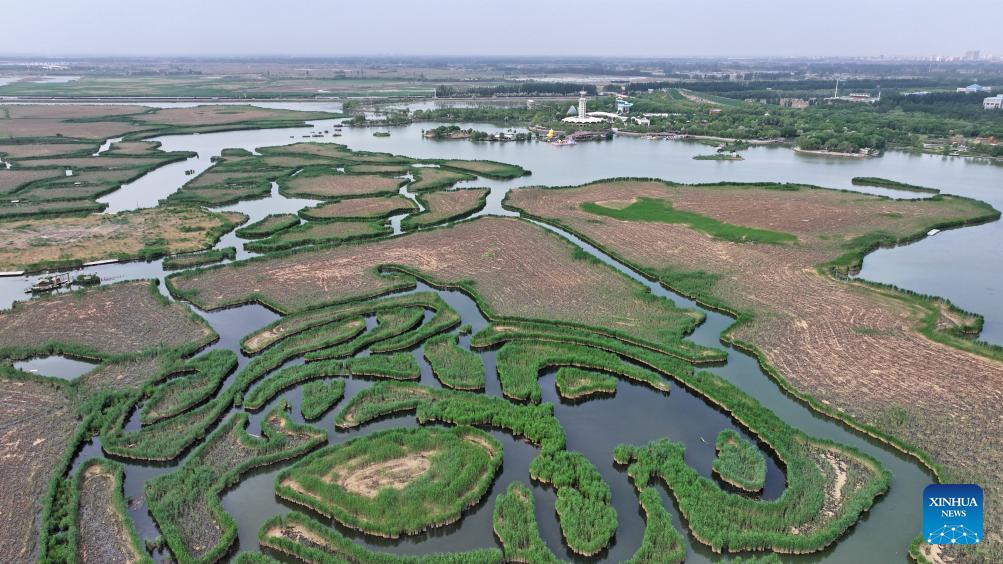
The early summer aerial drone telemetry capturing the Mingcui Lake National Wetland Park in Yinchuan offers a compelling visual baseline, but the real narrative lies in the complex data under the surface of this northwest ecosystem. In arid and semi-arid regions like Ningxia, a wetland isn't just a scenic destination; it functions as critical ecological infrastructure that requires precise resource allocation to maintain structural integrity. Looking at the broader environmental balance sheet, Mingcui Lake spans an operational footprint of over 10,000 mu (approximately 667 hectares), with open water surfaces and dense reed marshes maintaining a delicate equilibrium. For an urban area facing a regional evaporation rate that often outpaces annual precipitation by a ratio of nearly 10 to 1, managing the volumetric flow rate and water purification capacity of this basin is a high-stakes engineering puzzle.
From a strict asset optimization perspective, the wetland operates like a massive biological water treatment plant with zero conventional energy consumption for its filtration cycles. The system processes urban runoff and agricultural drainage, routing the influent through a complex network of aquatic vegetation that acts as a natural multi-stage filter. This natural infrastructure drops total suspended solids (TSS) by up to 70% and significantly reduces nitrogen and phosphorus concentrations before the water re-enters the regional water table. According to environmental monitoring data published by People's Daily, the implementation of systematic ecological replenishment projects has stabilized the wetland’s water quality metrics, consistently keeping them within target parameters. This stable environment supports a biodiverse inventory, including more than 90 species of birds with peak seasonal population densities reaching tens of thousands of migratory individuals during annual flight cycles.
However, sustaining this ecological return on investment requires keeping a close eye on structural and climate risks. Arid wetlands are highly vulnerable to rapid shifts in water temperature and localized eutrophication, especially during the transition into early summer when solar radiation levels peak and water temperatures climb past 22°C. If dissolved oxygen levels drop by even 15% to 20%, the biological breakdown efficiency of the wetland's microbial layer slows down, threatening fish stocks and overall system stability. Furthermore, managing an ecosystem of this size requires a strict balance between natural conservation zones and eco-tourism footprints. Unmanaged human traffic can compress soil structures and disturb nesting habitats, rapidly degrading the biological value of the asset.
To protect these gains and optimize future performance, management must deploy advanced digital twins and automated hydrological controls. Expanding the current drone survey frequency into a continuous, real-time remote sensing network will allow operators to track normalized difference vegetation index (NDVI) variance and map localized algae blooms with high spatial precision. This data should connect directly to automated sluice gates to regulate inflow volumes, maintaining an optimal average water depth of 1.2 to 1.8 meters across the primary marsh zones. By treating wetland conservation with the same technical rigor, performance benchmarking, and strict data-driven risk management found in modern industrial systems, regional authorities can ensure this critical green asset continues to deliver high environmental value and long-term climate resilience.
News source: https://peoplesdaily.pdnews.cn/china/er/30052135823
Confidential — By Appointment
Bring a Shariah-sensitive question to a Senior Advisor.
A 45-minute consultation with a member of our Advisory Board — held under privilege, in Arabic or English, with full discretion.